Custom application, 30 acres an hour.
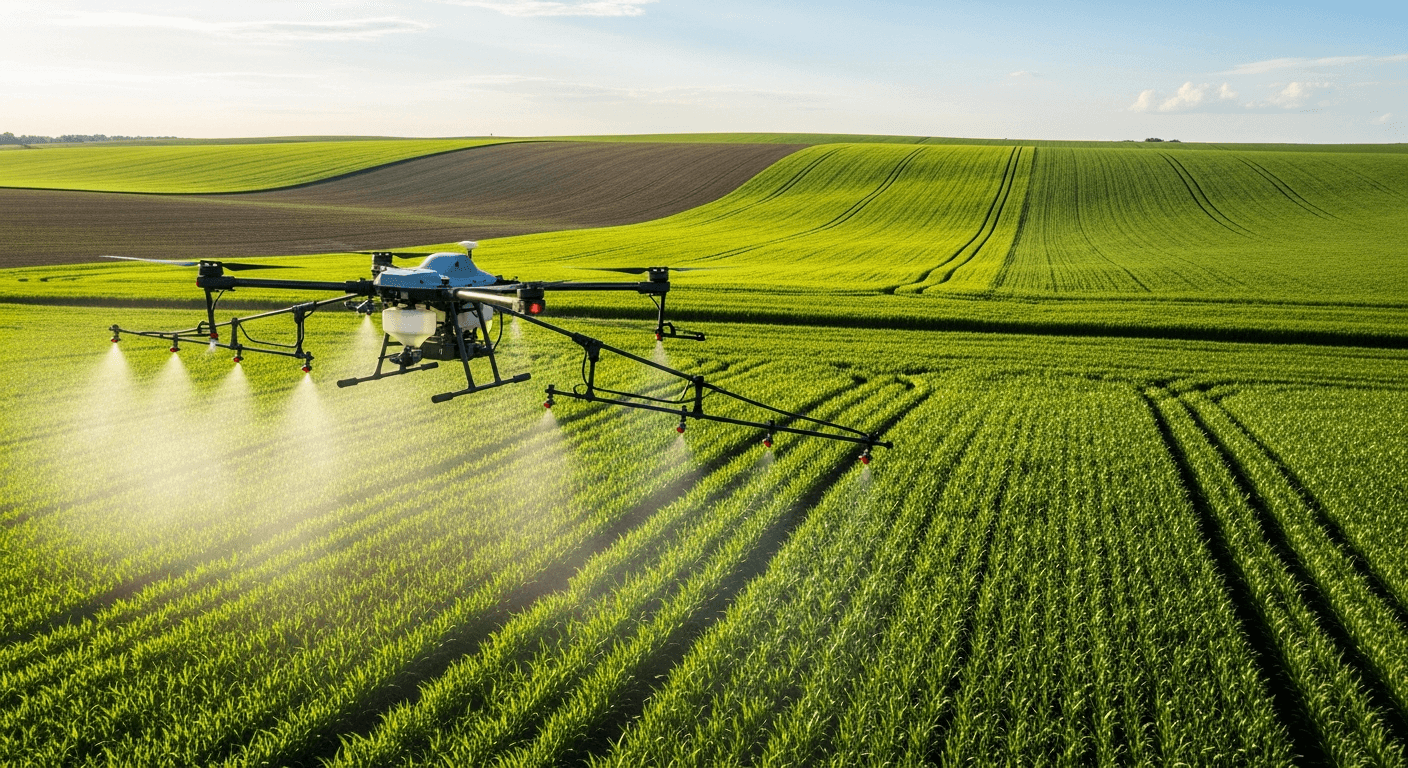
Lime to balance pH. Fertilizer to get nitrogen into the soil. Pesticide to manage weeds and pests. Flown on XAG drones at about 30 acres an hour, and that figure includes the battery changes. Roughly 300 acres in a 10-hour day.
Including battery swaps and refills.
In a 10-hour working day.
Lime, fertilizer, pesticide. Liquid or granular.
Calm wind, no pollinators. A lot of our spraying happens after dark.
What goes on, and why
Custom application is the service most farms call us for first. It is the same job an applicator does from a rig, done from the air, with the rate and the placement coming from the map instead of from the seat.
- Lime
- To balance pH before anything else goes on.
- Fertilizer
- To get nitrogen into the soil, repeated over the season as the crop needs it.
- Pesticide
- To manage weeds and pests. Spot-treated where the scan shows stress.
- Cover crop
- Granular broadcast over standing corn at the end of the season.
A season of passes, not one pass
Spraying is part of a multi-treatment regime that most farms need anyway. Balance the pH to begin with. Fertilize. Do the weed control and keep fertilizing over time. Then, at the end of the season, the pass that used to be impossible: broadcasting cover crop seed over the corn before it is picked.
That gives the cover crop a head start. It establishes while the nitrogen level in the soil is still high and holds the ground against erosion through the winter. It is an overlapping schedule, and it is one of the strongest arguments for having the drone on the farm.
When we fly
Rain right after a pass washes most pesticide into the soil, which wastes the product and does the field no good. So the spray schedule follows the forecast. We work inside a two-week weather window, watch relative humidity and temperature inversions, and hold for wind.
A lot of the spraying happens in the evenings and at night. The wind is calmer and there are no pollinators working. Expect to hear the drones after dark.
Get your acres on the schedule.
Tell us the farm, the acreage and what you want applied. We build the spring calendar by region, so early requests shape the route.